


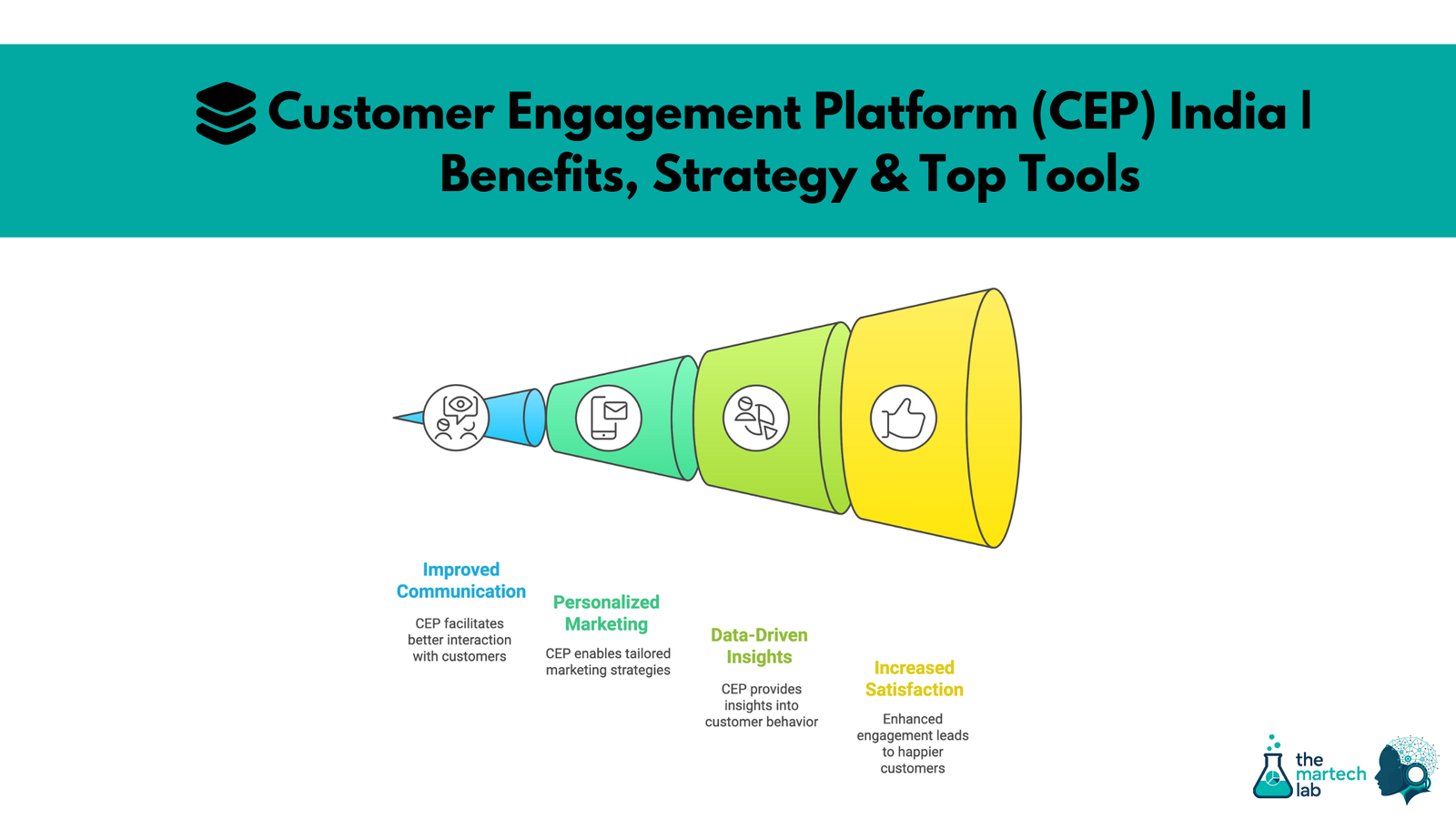
Learn what a Customer Engagement Platform (CEP) is, how it works, and why Indian brands use it to automate personalisation, improve retention, and boost ROI. Includes tools, strategy, and case studies.
Introduction
Today’s Indian consumer moves across apps, websites, WhatsApp, email, SMS, and social platforms within minutes.
For brands, the challenge is not generating leads; it’s keeping customers engaged consistently across these touchpoints.
This is exactly where a Customer Engagement Platform (CEP) becomes indispensable.
A CEP unifies customer data, automates personalised communication, and delivers relevant experiences across channels, increasing conversions, retention, and customer lifetime value.
CEPs are now a core part of modern MarTech stacks across BFSI, D2C, real estate, retail, and digital-first brands.
What Is a Customer Engagement Platform (CEP)?
A Customer Engagement Platform is software that automates, personalizes, and orchestrates customer communication across multiple digital channels such as:
- SMS
- Web Push
- App Push
- In-App messages
It uses customer data, behavior, and AI insights to deliver the right message at the right time — automatically.
Example
- A user installs a fintech app →
- Views loan options →
- Exits without applying →
- Gets a WhatsApp reminder + personalized offer →
- Receives follow-up email →
- Gets push notification at optimal time
All managed by the CEP — no manual effort involved.
Why CEPs Matter for Indian Brands
1. Omnichannel Customer Journeys
Indian users switch between channels rapidly. A CEP ensures messaging stays coordinated and consistent everywhere.
2. AI-Powered Personalization
CEPs identify patterns, behaviours, and preferences to deliver tailored content that boosts conversions.
3. Reduced Manual Effort
Marketers build once, and the system runs journeys on autopilot.
4. Higher Engagement and Retention
Behaviour-based nudges (e.g., cart abandonment, inactivity, renewal reminders) significantly increase engagement.
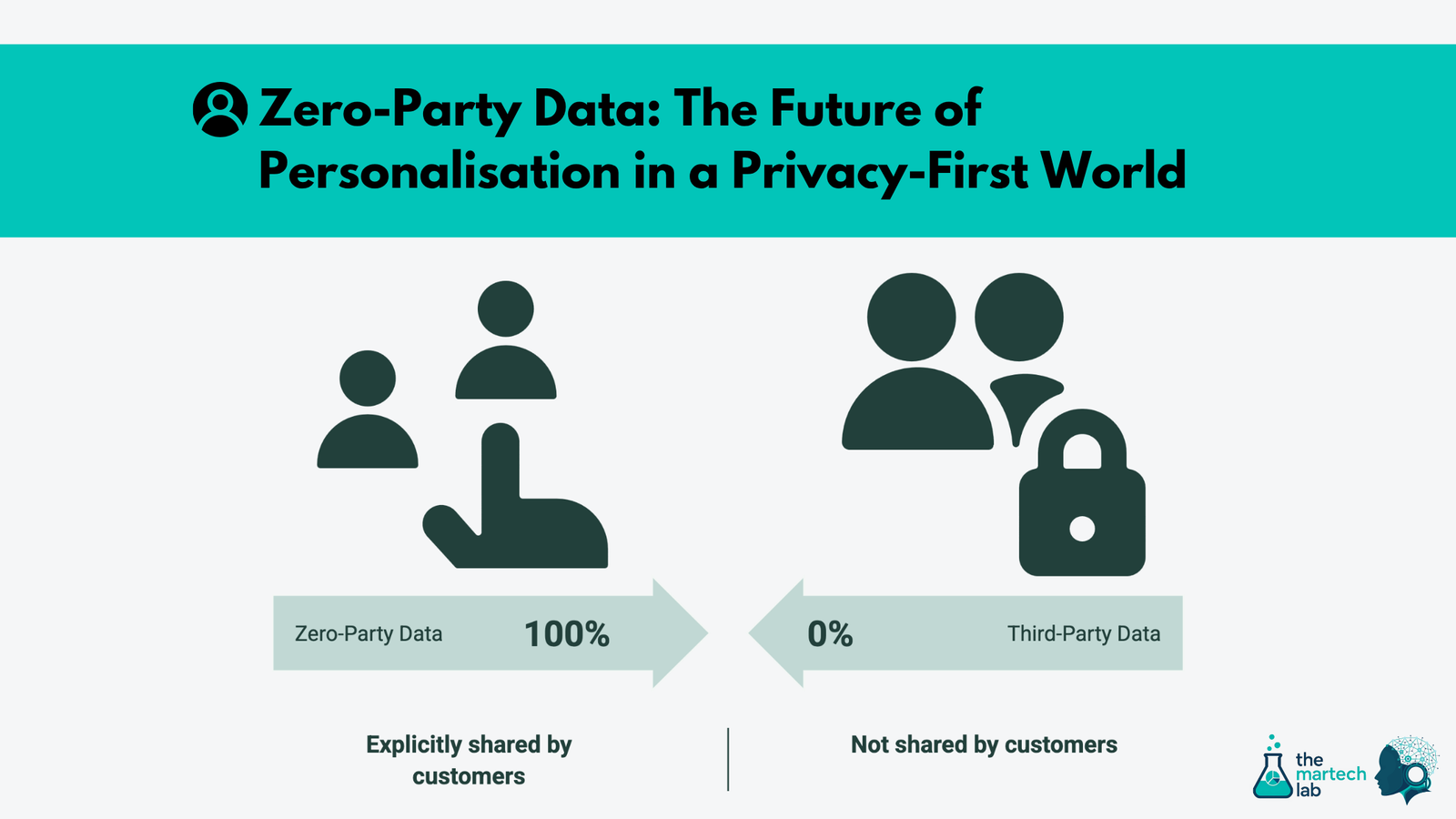
5. Consent-First Marketing
CEPs help brands manage consent logs, preferences, and opt-ins — aligning with DPDP and data privacy expectations.
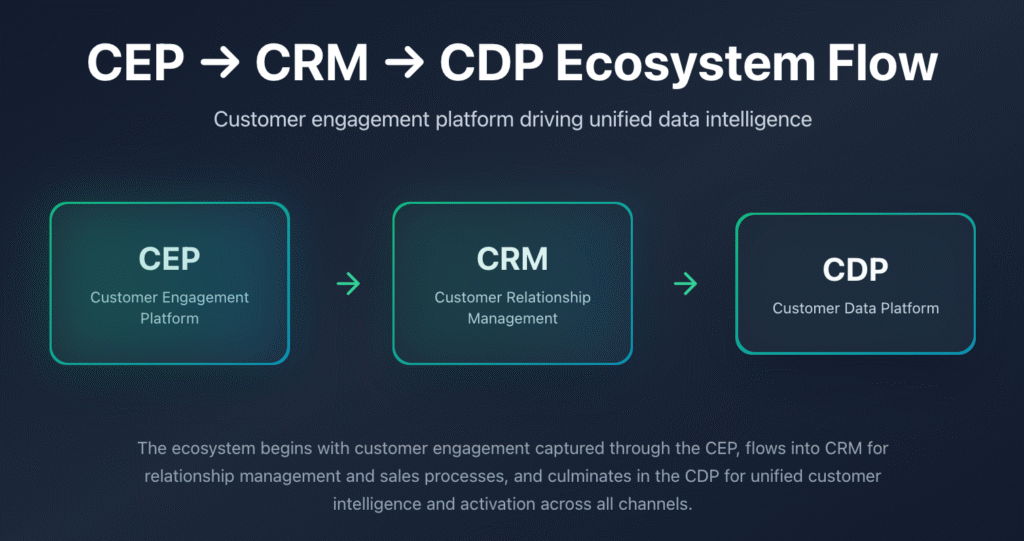
CEP vs CRM vs CDP — Clear Differences
| Platform | Purpose | Who Uses It | Examples |
|---|---|---|---|
| CEP | Customer engagement & personalization | Marketing & retention teams | MoEngage, WebEngage, Netcore |
| CRM | Sales pipeline & customer communication management | Sales & support teams | Zoho, Salesforce, Leadsquared |
| CDP | Unifies customer data across touchpoints | Data teams & marketers | Segment, Lemnisk |
In short:
- CDP → Organises data
- CEP → Activates and engages customers
- CRM → Manages relationships and follow-ups
How a CEP Works (Step-by-Step Breakdown)
1. Data Collection
Customer behaviour and attributes are collected from:
- Website
- Mobile app
- CRM
- Ad platforms
- Offline systems (POS, call centre)
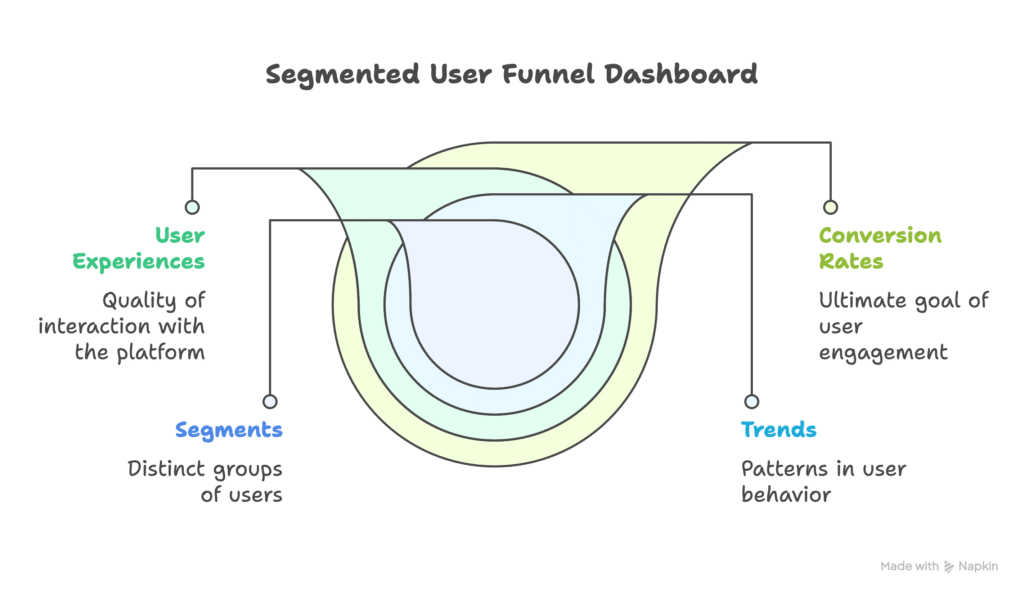
2. Segmentation
Users are divided into meaningful groups based on behaviour, lifecycle stage, or engagement.
3. Journey Building
Marketers define automated workflows using triggers such as signup, purchase, inactivity, cart abandonment, etc.
4. Personalisation Engine
AI decides the best channel, best timing, and best content variation.
5. Delivery Across Channels
Messages are sent automatically through WhatsApp, Email, SMS, Push, or In-App.
6. Measurement & Optimisation
Real-time analytics reveal drop-offs, best-performing channels, and improvement areas.
Key Features of a Modern CEP
| Feature | Description |
|---|---|
| Omnichannel messaging | Actions like browsing, cart abandonment, or inactivity trigger messages |
| Engage users across WhatsApp, SMS, Email, and Push | Optimise variations and creatives |
| AI Recommendations | Product suggestions, timing optimisation, and content scoring |
| Journey Builder | Drag-and-drop workflow creator |
| A/B testing | Consent & preference centre |
| Consent & preference center | Capture and manage communication consent |
| Deep integrations | CRM, CDP, analytics, ad platforms |
Popular CEP Platforms in India
| Platform | Ideal For | Strengths |
|---|---|---|
| MoEngage | BFSI, Fintech, D2C | Strong app push, AI segmentation |
| WebEngage | Retail, D2C, EdTech | Robust journey builder & retention |
| Netcore Cloud | BFSI, Media, Large Enterprises | AMP emails, CDP + CEP in one stack |
| CleverTap | Mobile-first brands, startups | Real-time analytics + engagement |
| Salesforce Marketing Cloud | Enterprises | Deep integration + global capabilities |
Industry-Wise Use Cases in India
BFSI
- Loan reminders
- Premium payment nudges
- Personalized credit card offers
- KYC completion reminders
D2C & Retail
- Cart abandonment journeys
- Price drop alerts
- Loyalty program nudges
- Personalized product recommendations
EdTech
- Trial-to-paid nudges
- Lecture reminders
- Assignment follow-ups
Real Estate
- Site visit reminders
- Price update communication
- Post-visit nurturing
Travel
- Booking reminders
- Itinerary notifications
- Dynamic price alerts
Case Study: D2C Brand Improves Retention with CEP
A fast-growing skincare brand saw high churn despite strong acquisition.
After implementing a CEP:
- They tracked inactivity after Day 7
- Triggered WhatsApp + push reminders
- Sent personalized re-order offers
- Used AI to suggest relevant bundles
Results:
- Repeat purchase ↑ 42%
- CTR ↑ 3.8x
- Customer LTV ↑ 54%
- Marketing cost ↓ 27%
CEPs and Data Privacy (DPDP Compliance)
India’s data privacy ecosystem requires brands to:
- Collect explicit opt-ins for each channel
- Store consent metadata
- Provide simple opt-out mechanisms
- Avoid unnecessary data collection
- Use transparent data handling practices
Most leading CEPs now come with built-in consent and preference centers.
Common Mistakes Brands Make with CEPs
- ❌ Sending too many messages on multiple channels
- ❌ Poor segmentation — treating all users the same
- ❌ Not using behavioral triggers
- ❌ Lack of CRM integration
- ❌ Ignoring message fatigue scores
- ❌ Creating journeys but not monitoring performance
Engagement ≠ blasting messages. It’s about meaningful, timely communication.
Pro Tips for Effective CEP Implementation
- ✔ Use behaviour-first segmentation
- ✔ Prioritize WhatsApp + email combo journeys
- ✔ Maintain optimal frequency (not too much, not too little)
- ✔ Test multiple creatives before scaling
- ✔ Automate abandoned cart & reactivation journeys first
- ✔ Connect CEP with CRM for full-funnel visibility
Final Thoughts
A Customer Engagement Platform is no longer a “nice-to-have”; it’s a core engine for growth in India.
From onboarding to retention, from personalisation to compliance, a CEP unifies the customer journey and ensures that brands communicate with clarity, relevance, and empathy.
In a world where customer attention is shrinking, engagement is the new currency of marketing.
Brands that invest in CEPs will build relationships that last—and outperform competitors who rely solely on acquisition.
FAQs
No, many CEPs offer SMB-friendly plans.
No. CRM manages sales; CEP manages marketing engagement. Both complement each other.
Absolutely, India is a WhatsApp-first country.
AI enhances timing, content, and personalisation, significantly improving ROI.


Leave a Reply