

Learn how Indian marketers use data-driven customer segmentation to improve targeting, personalization, and ROI. Includes strategy, examples, and tools.
Introduction
In current scenario, marketing personalization begins long before a campaign is launched, it starts with customer segmentation.
With competition high and customer attention shrinking, marketers can no longer afford one-size-fits-all campaigns. From D2C to BFSI, real estate to e-commerce, data-driven segmentation has become the foundation of every successful marketing strategy in India.
Customer segmentation helps marketers divide audiences based on behavior, intent, and lifecycle stage allowing for smarter messaging, higher ROI, and faster conversions.
What Is Customer Segmentation?
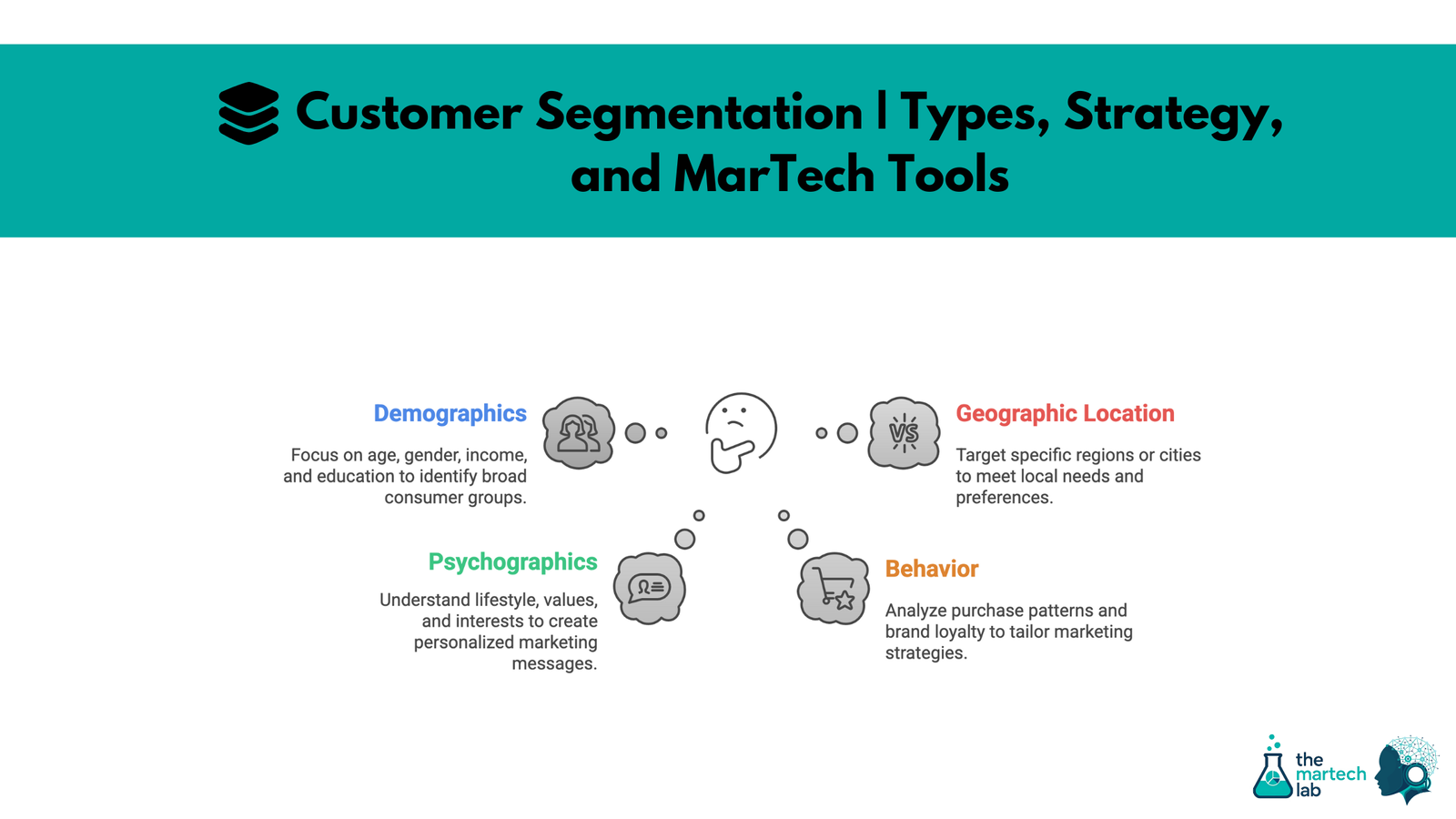
Customer segmentation is the process of dividing your target audience into smaller, meaningful groups based on shared characteristics like demographics, behavior, interests, or engagement level.
Each segment receives personalized communication — the right message, at the right time, through the right channel.
Example:
A real estate developer might have three primary customer segments:
- 🏠 First-time homebuyers seeking affordable units
- 🏙️ Upgraders looking for luxury projects
- 💼 Investors wanting high-ROI properties
Each requires a distinct communication tone, offer, and journey.
Why Customer Segmentation Matters?
- Improves ROI and Reduces Wastage
Instead of targeting everyone, you invest media budgets only where conversions are likely. - Enables Hyper-Personalization
With AI and automation tools, marketers can now personalize messaging at scale. - Enhances Customer Experience (CX)
Customers prefer relevant offers and communication — segmentation ensures that. - Supports Compliance under DPDP Act
Data segmentation ensures only necessary, consent-based targeting — aligning with India’s privacy laws. - Increases Customer Retention
Segmenting by lifecycle stage allows you to retain users with timely engagement triggers.
Segmentation isn’t about cutting your audience — it’s about connecting with them smarter.
Types of Customer Segmentation
| Type | Basis | Example (India Context) |
|---|---|---|
| Demographic | Age, gender, income, education | Targeting working professionals for credit cards |
| Geographic | City, region, climate | Regional WhatsApp campaigns in Tamil Nadu or Gujarat |
| Behavioral | Actions, purchases, engagement | Users abandoning loan forms or carts |
| Psychographic | Lifestyle, interests, values | Travel enthusiasts for insurance upsell |
| Technographic | Device, app usage, channel preference | Mobile-first users for push campaigns |
| Lifecycle / Stage-based | Lead, customer, loyalist | Re-engagement emails for inactive users |
How to Build an Effective Segmentation Strategy
Step 1: Define Your Objective
Is your goal to increase sales, improve retention, or reduce churn?
Segmentation should align with measurable business outcomes.
Step 2: Collect & Clean Data
Data is your fuel. Pull from:
- CRM (Salesforce, Zoho, Leadsquared)
- CDP (Netcore, Lemnisk, MoEngage)
- Ad platforms (Meta, Google Ads)
- Analytics (GA4, Mixpanel)
- Offline touchpoints (POS, call center logs)
Always ensure data is consent-based per DPDP guidelines.
Step 3: Identify Segmentation Parameters
Use variables that reflect intent — not vanity.
Example: Frequency of purchase > Age group.
Step 4: Use AI for Smart Clustering
Modern MarTech platforms use AI to group audiences by engagement patterns, conversion probability, or churn risk.
Step 5: Personalize Journeys per Segment
Each segment deserves a dedicated journey across WhatsApp, Email, and Web.
Step 6: Measure & Iterate
Use analytics dashboards to monitor open rates, CTRs, conversion rates, and ROI per segment.
Example: BFSI Segment Framework
| Segment | Trigger | Message | Channel | Outcome |
|---|---|---|---|---|
| New Loan Enquiry | Form submitted | “Check your eligibility instantly” | Lead qualification | |
| Partial KYC | KYC incomplete | “Complete KYC to unlock your offer” | Email + Push | Completion rate ↑ |
| Existing Customer | Active EMI | “Avail pre-approved top-up loan” | Cross-sell | |
| Dormant User | Inactive 90 days | “We’ve missed you — here’s a loyalty bonus” | SMS | Re-activation |
Automation workflows ensure timely, personalized engagement — improving conversions by up to 40%.
Example: Real Estate Segmentation (2025)
| Segment | Data Points | Journey Objective | Channel |
|---|---|---|---|
| 1 BHK Buyers (Budget) | Income, search queries, WhatsApp inquiry | Drive brochure downloads | |
| Luxury Upgraders | Location, income bracket, browsing time | Schedule site visit | Email + CRM Call |
| Investors | Property size, ROI filters | Share ROI calculator | |
| Post-Visit Users | Site visit date | Trigger referral or EMI offer | WhatsApp + Email |
Segmentation ROI Snapshot
| Metric | Before Segmentation | After Segmentation |
|---|---|---|
| CTR | 1.8% | 4.9% |
| Lead-to-Sale | 2.4% | 6.2% |
| Cost per Conversion | ₹2,200 | ₹1,250 |
| Retention Rate | 38% | 64% |
Smarter segmentation = lower cost + higher lifetime value.
MarTech Tools for Customer Segmentation
| Category | Tools | Use Case |
|---|---|---|
| CDP (Data Layer) | Netcore, Lemnisk, Segment | Combine customer data sources |
| CRM (Execution Layer) | Zoho, Leadsquared, Salesforce | Manage leads & communication |
| Automation | MoEngage, WebEngage, Netcore | Build journeys & triggers |
| Analytics | GA4, Mixpanel, Power BI | Measure engagement |
| AI Personalization | ChatGPT, Insider, Optimizely | Predict best offers or content |
Integration Tip:
Sync CRM → CDP → Automation for seamless segment activation.
DPDP Compliance for Segmentation
The Digital Personal Data Protection (DPDP) Act 2025 governs how customer data is collected, stored, and processed in India.
- ✅ Collect clear opt-ins before segmenting users.
- ✅ Store purpose-based consent (e.g., “marketing communication”).
- ✅ Don’t use sensitive personal data (religion, health) for targeting.
- ✅ Maintain audit logs in your CRM/CDP.
Compliance builds trust — and trust drives retention.
Case Study — D2C Brand Boosts Repeat Purchase
A skincare brand segmented customers into three clusters based on purchase behavior:
- One-time buyers
- Regular subscribers
- Churn-risk users
They built unique WhatsApp and Email journeys:
- One-time buyers → Subscription offer
- Regular users → Upsell with combo packs
- Churn-risk → Personalized discount reminder
Results:
- CTR ↑ 3.2x
- Repeat purchase ↑ 48%
- CAC ↓ 27%
Pro Tips for 2025
- ✅ Use predictive segmentation — AI can forecast behavior before it happens.
- ✅ Test micro-segments — refine by campaign data, not assumptions.
- ✅ Localize content — segmentation is only effective if messaging fits the region.
- ✅ Integrate WhatsApp automation for instant segment activation.
- ✅ Monitor segment decay — refresh every 60–90 days to avoid data drift.
Final Thoughts
Customer segmentation is no longer optional, it’s marketing hygiene.
Currently, Indian marketers who combine data, consent, and creativity will outperform those relying on generic messaging.
Segmentation is not about labels, it’s about understanding customers as humans.
And the brands that do that best will not just sell, they’ll build loyalty that lasts.
FAQs
Hybrid — a mix of demographic + behavioral + lifecycle data works best.
Every 2–3 months, or automatically via CDP AI refresh cycles.
Segmentation divides audiences; personalization tailors content for each segment.
Yes, start with Google Sheets, CRM exports, or low-cost tools like Zoho Campaigns.


Leave a Reply