


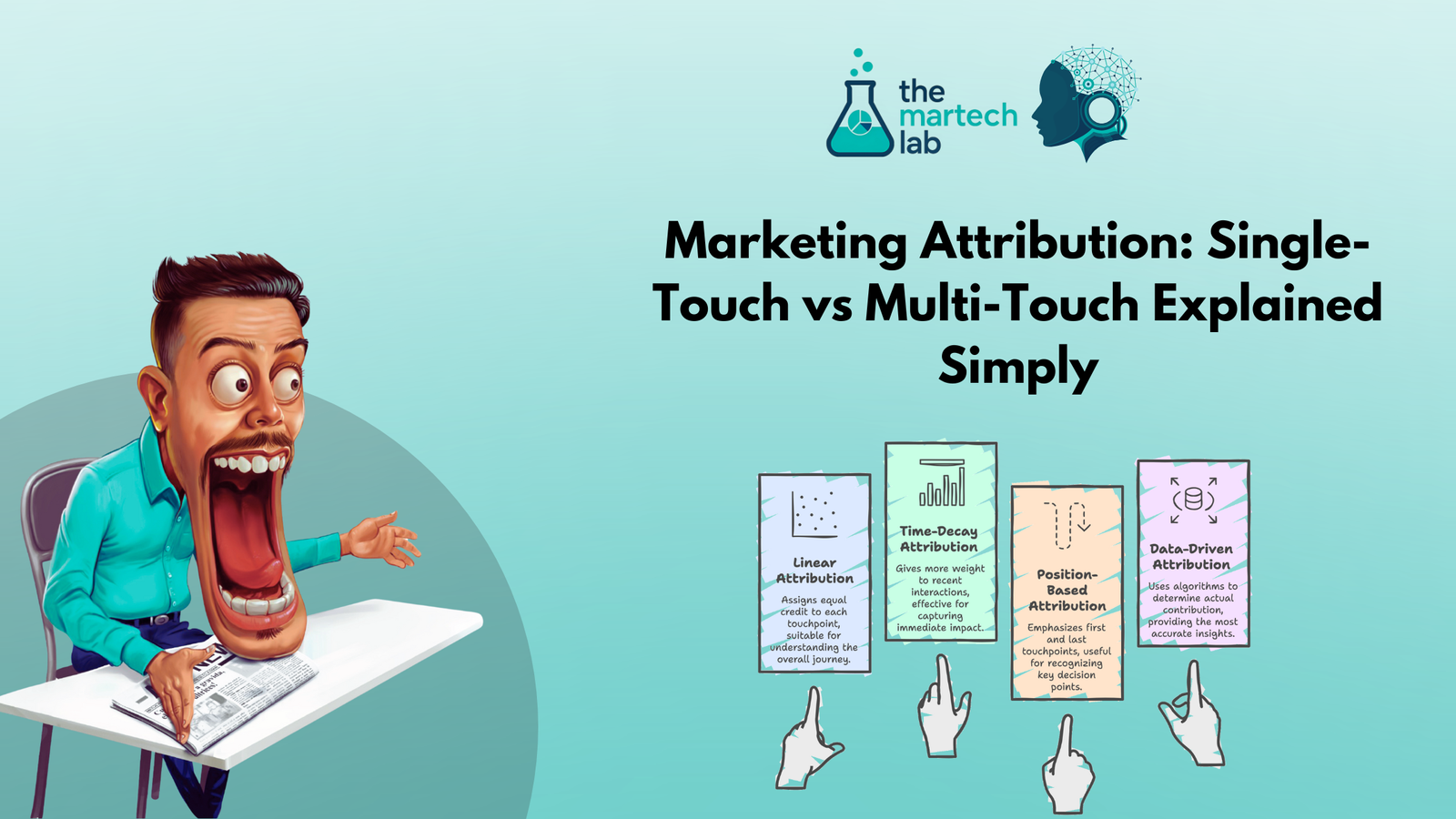
Learn what marketing attribution is, how single-touch and multi-touch attribution models work, and which one is right for your business. Simple explanations with examples and use cases.
Introduction
Every marketer asks the same question at some point:
“Which channel actually drove the conversion?”
Was it the Google ad?
The WhatsApp follow-up?
The email reminder?
Or the sales call?
Without a clear answer, budgets are allocated based on assumptions not data. This is where marketing attribution becomes critical.
Attribution helps marketers understand how different touchpoints contribute to conversions, so decisions regarding spend, channels, and strategy are grounded in reality rather than guesswork.
What Is Marketing Attribution?
Marketing attribution is the method used to assign credit for a conversion (lead, sale, booking, signup) to one or more marketing touchpoints that influenced the customer’s decision.
In simple terms, it answers:
👉 “Which marketing efforts deserve credit for this conversion?”
Touchpoints may include:
- Paid ads (Google, Meta, LinkedIn)
- Website visits
- Email campaigns
- WhatsApp messages
- SMS reminders
- Sales calls
- App push notifications
Attribution models decide how credit is distributed across these interactions.
Why Marketing Attribution Matters
1️⃣ Better Budget Allocation
Knowing what works helps you invest more in high-impact channels and reduce waste.
2️⃣ Improved ROI
Attribution reveals which campaigns assist conversions — not just close them.
3️⃣ Smarter Strategy
You stop over-optimising last clicks and start optimising the full journey.
4️⃣ Alignment Between Teams
Marketing and sales finally speak the same performance language.
5️⃣ Accurate Performance Reporting
Leadership gets clarity on how revenue is actually generated.
The Customer Journey Is Not Linear
Modern customer journeys are messy and non-linear.
A typical journey may look like this:
- Google search
- Website visit
- WhatsApp enquiry
- Email follow-up
- Retargeting ad
- Sales call
- Conversion
Attribution exists because no single channel works alone.
Single-Touch Attribution Explained
Single-touch attribution assigns 100% credit for a conversion to one touchpoint only.
Common Single-Touch Models
1️⃣ First-Touch Attribution
All credit goes to the first interaction.
📌 Example:
- First visit via Google Ads
- Later emails and WhatsApp messages were ignored
- Google Ads gets 100% credit
Best for:
- Brand awareness analysis
- Early-stage growth tracking
2️⃣ Last-Touch Attribution
All credit goes to the final interaction before conversion.
📌 Example:
- Customer clicked a WhatsApp message and converted
- WhatsApp gets 100% credit
Best for:
- Short sales cycles
- Performance reporting
Pros of Single-Touch Attribution
- ✔ Simple to understand
- ✔ Easy to implement
- ✔ Works with limited data
- ✔ Supported by most analytics tools
Cons of Single-Touch Attribution
- ❌ Ignores the rest of the journey
- ❌ Overvalues one channel
- ❌ Encourages channel bias
- ❌ Leads to poor long-term decisions
Single-touch attribution answers “what closed”, not “what influenced.”
Multi-Touch Attribution Explained
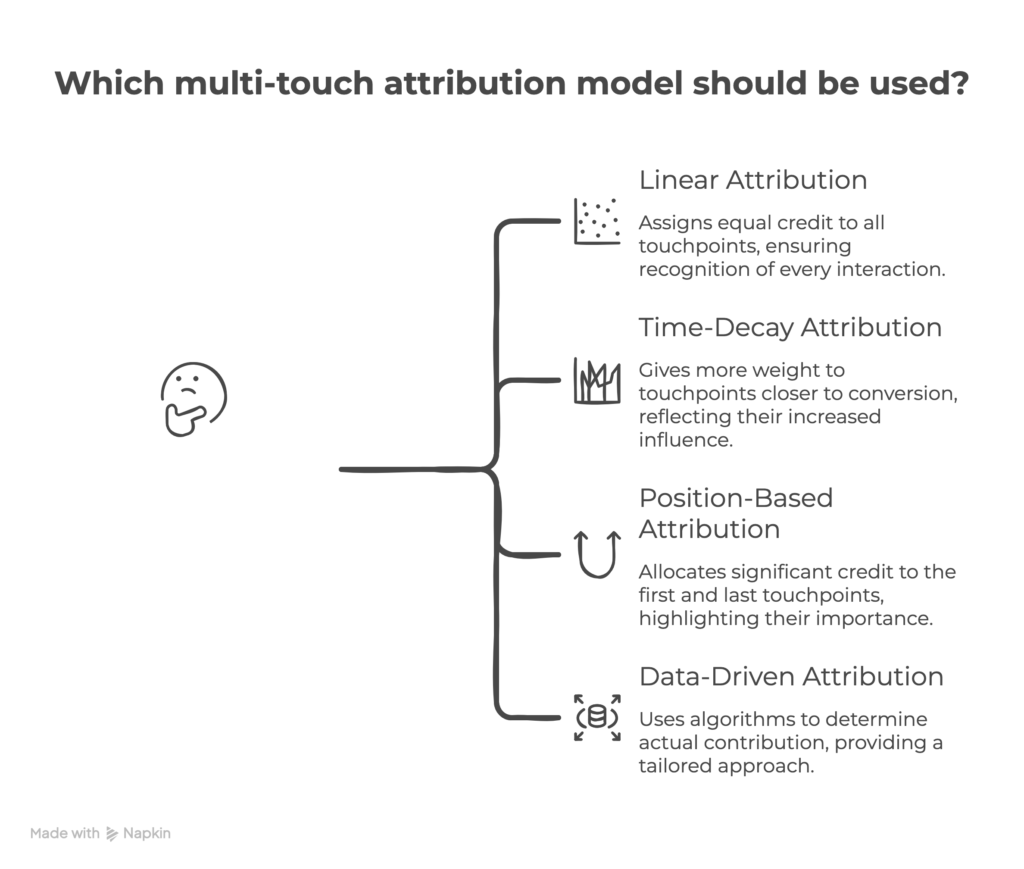
Multi-touch attribution distributes credit across multiple touchpoints in the customer journey.
Instead of giving all credit to one channel, it acknowledges that conversions happen through influence, not isolation.
Common Multi-Touch Attribution Models
1️⃣ Linear Attribution
All touchpoints get equal credit.
📌 Example:
- Google Ad → Website → Email → WhatsApp → Conversion
- Each gets 25% credit
Best for:
- Understanding full-funnel contribution
2️⃣ Time-Decay Attribution
Touchpoints closer to conversion get more credit.
📌 Example:
- WhatsApp & email closer to purchase get higher weight
- Earlier interactions get less
Best for:
- Longer sales cycles (BFSI, real estate, B2B)
3️⃣ Position-Based (U-Shaped) Attribution
- First interaction: high credit
- Last interaction: high credit
- Middle interactions: shared credit
Best for:
- Lead-driven funnels
- Balanced awareness + conversion analysis
4️⃣ Data-Driven Attribution
Uses algorithms to assign credit based on actual impact.
Best for:
- Large datasets
- Mature analytics setups
Single-Touch vs Multi-Touch – Quick Comparison
| Aspect | Single-Touch | Multi-Touch |
|---|---|---|
| Credit Allocation | One channel | Multiple channels |
| Accuracy | Low–Medium | High |
| Complexity | Low | Medium–High |
| Best For | Simple funnels | Complex journeys |
| Insight Depth | Limited | Holistic |
| Decision Quality | Tactical | Strategic |
Industry-Wise Attribution Preference
| Industry | Recommended Model | Reason |
|---|---|---|
| D2C / Ecommerce | Multi-touch (Linear / Data-Driven) | Multiple touchpoints influence purchase |
| BFSI | Time-decay | Long consideration cycles |
| Real Estate | Position-based | First lead + final follow-up matter |
| EdTech | Multi-touch | Trials, nurturing, counseling |
| Local Services | Last-touch | Short conversion window |
Example: Attribution in Real Life
A real estate lead converts after:
- Google search
- Website visit
- WhatsApp conversation
- Site visit reminder
- Sales call
Last-Touch View
➡ Sales call gets 100% credit
Multi-Touch View
➡ Google, WhatsApp, CRM follow-ups all share credit
Which view is more useful for decision-making? The second one.
Tools That Support Attribution
| Tool | Capability |
|---|---|
| GA4 | Data-driven & rule-based models |
| CRM systems | Sales attribution |
| Marketing automation platforms | Journey-level attribution |
| BI tools | Custom attribution views |
Attribution improves when analytics + CRM + engagement data are connected.
Common Attribution Mistakes
- ❌ Relying only on last-touch
- ❌ Ignoring offline touchpoints
- ❌ Not connecting CRM outcomes
- ❌ Over-trusting one dashboard
- ❌ Using attribution only for reporting, not optimization
Attribution is a decision tool, not just a report.
How to Choose the Right Attribution Model
Ask these questions:
- ✔ How long is your sales cycle?
- ✔ How many channels influence conversion?
- ✔ Is your goal optimization or reporting?
- ✔ Do you have enough data volume?
Rule of thumb:
- Short cycle → Single-touch may work
- Long / complex cycle → Multi-touch is essential
FAQs
Not always, it depends on funnel complexity and data maturity.
Yes. Even basic models provide better insight than none.
GA4 is a strong start, but CRM integration improves accuracy.
No, it supports smarter decisions with evidence.


Leave a Reply